

At VLSI Monks, our RTL (Register Transfer Level) Design services form the foundation of sophisticated digital system development tailored for modern semiconductor applications. RTL design is the cornerstone of any ASIC, SoC, or FPGA project — translating architectural specifications into detailed hardware models that can be synthesized and verified with precision.

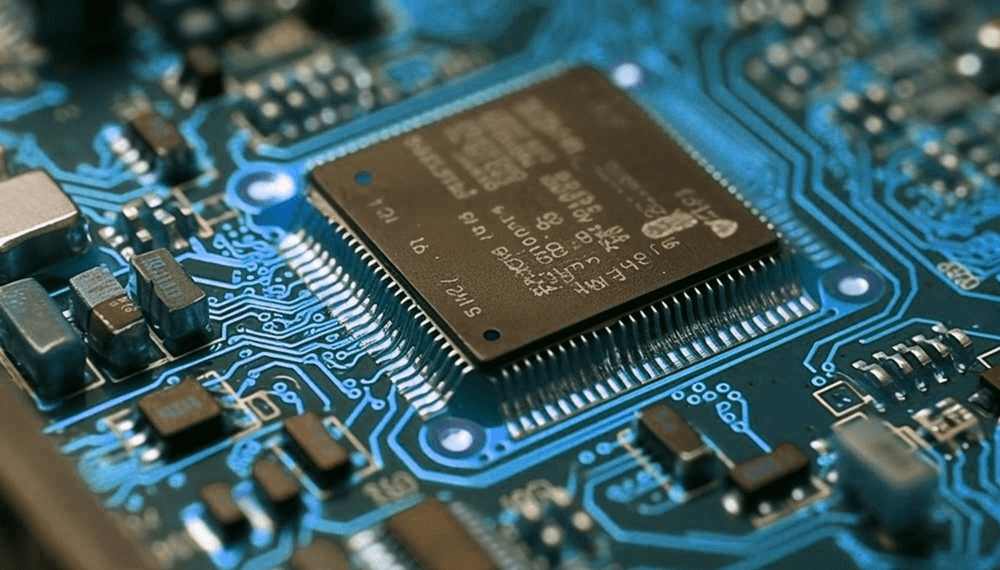

RT L (Register Transfer Level) design is a method of describing digital systems in terms of data flow between registers and the logic that operates on that data. Using industry-standard hardware description languages such as Verilog and SystemVerilog, RTL code abstracts functionality into synthesizable logic that becomes the blueprint for physical hardware implementation. It ensures that designs not only perform as intended but are also optimized for performance, power, and area.
At VLSI Monks, our RTL design flow is comprehensive — starting from high-level specification through to synthesizable HDL code:
We begin by analyzing your design objectives and creating a high-level architectural plan that captures the functional and performance requirements of your system.
A structured low-level design document (LLD) is created, detailing modules, interfaces, state machines, and timing behavior to guide efficient RTL implementation.
Our engineers write clean, synthesizable RTL code in Verilog and SystemVerilog, following industry best practices for readability, reuse, and verification readiness.
We incorporate coding guidelines to support low-power techniques, clock-domain crossing (CDC) awareness, static timing considerations, and power intent specification.
Our RTL design team combines deep technical expertise and industry experience across multiple technology verticals:
Partnering with VLSI Monks for RTL design enables:

Lorem ipsum dolor sit amet, conse ctetur adipiscing elit. Ut elit tellus off, luctus nec ullamc orper mattis, pvinar dapibus leo.
Lorem ipsum dolor sit amet, conse ctetur adipiscing elit. Ut elit tellus off, luctus nec ullamc orper mattis, pvinar dapibus leo.
Lorem ipsum dolor sit amet, conse ctetur adipiscing elit. Ut elit tellus off, luctus nec ullamc orper mattis, pvinar dapibus leo.
Lorem ipsum dolor sit amet, conse ctetur adipiscing elit. Ut elit tellus off, luctus nec ullamc orper mattis, pvinar dapibus leo.
Lorem ipsum dolor sit amet, conse ctetur adipiscing elit. Ut elit tellus off, luctus nec ullamc orper mattis, pvinar dapibus leo.
Lorem ipsum dolor sit amet, conse ctetur adipiscing elit. Ut elit tellus off, luctus nec ullamc orper mattis, pvinar dapibus leo.
Lorem ipsum dolor sit amet, conse ctetur adipiscing elit. Ut elit tellus off, luctus nec ullamc orper mattis, pvinar dapibus leo.
Lorem ipsum dolor sit amet, conse ctetur adipiscing elit. Ut elit tellus off, luctus nec ullamc orper mattis, pvinar dapibus leo.